

Standard porta potty
$125 to $250 a weekend
Charlotte, NC
Slow drains, gurgling pipes, standing water over the drain field and a sewage smell near the tank are the four signs to act on fast. Most Charlotte homes run a 1,000 gallon tank pumped every 3 to 5 years, and waiting past a warning sign usually turns a routine pump into a backup in the house.

Slow drains in more than one fixture at once is the first tell. If the kitchen sink and the shower both back up on the same day, that is not a coincidence, that is a tank telling you it is full. Gurgling from toilets after a flush is next. Standing water or a soggy patch over the drain field, even without rain, means the tank is pushing effluent up because it has nowhere else to go. A sewage odor near the tank lid or the yard is the sign people notice last because they get used to it. Charlotte households on tanks sized for a 3 to 5 year pump cycle can watch for these signs building over months, not days. If you are unsure how the cycle works for your household size, how often to pump a septic tank breaks that down. Waiting on any of these signs risks a backup, and at that point you are looking at emergency septic service instead of a scheduled pump.
Same week, not same season. A tank that is showing surface signs is close to capacity, and a hard rain or a house full of guests can push it over. Charlotte's climate does not help: NOAA normals for Charlotte Douglas International Airport show 41.63 inches of average annual precipitation and 69.9 days a year with 0.10 inch or more, so a drain field that is already saturated has fewer dry days to recover. Booking septic pumping service as soon as you see a sign avoids the higher cost of an emergency call. If the smell or backup is already inside the house, treat it as urgent and call for emergency septic service the same day.
Pricing depends on tank access and whether the visit is scheduled or urgent.
| service | duration | low | typical | high |
|---|---|---|---|---|
| septic pumping | day | 150 | 250 | 300 |
| septic pumping | weekend | 50 | 100 | 150 |
A scheduled weekday pump runs higher than a weekend call in this dataset because weekend visits are often smaller jobs, not full tank service, so confirm scope when you book. Restaurants and commercial kitchens in Charlotte watch a different signal: a grease interceptor gets pumped once fats, oils, grease and solids reach 25 percent of the liquid depth, which is a separate service from grease trap pumping and runs on its own schedule. For a full breakdown of what drives the price up or down, see septic tank pumping cost.
Yes, mostly by watching what goes in and when the tank was last serviced. Households and job sites without a working bathroom often add a temporary unit rather than stress the system further; holding tank rental covers that gap during repairs. Construction crews working near a septic line should already be tracking OSHA 1926.51(c) toilet counts for the crew, since that ratio runs separate from the homeowner's tank and applies at 1 toilet per 20 workers or fewer. If you are renovating a home on septic and adding a bathroom or kitchen line, a home renovation porta potty keeps the crew off the existing system while work is underway. Tank pumping crews working in Charlotte's public right-of-way, say for access near a curb or sidewalk, fall under Charlotte Department of Transportation rules; CDOT's Right-of-Way Use Permit brochure names dumpsters and similar equipment as needing a permit, and that same placement question is worth confirming with the city before a septic truck sets up curbside. For general placement questions, porta potty placement guide covers clearance basics that also apply to service trucks.
Charlotte homes on well and septic outside the sewer service area see this most, and neighbors in Matthews, 12.2 miles southeast, and Mint Hill, 12.2 miles east, run the same tank cycles. Farther out, Huntersville sits 15.7 miles north and Fort Mill, SC is 19.7 miles southwest, both areas where septic is common outside city sewer lines. If your property sits near a construction zone with dumpsters or fencing already in place, check dumpster permit requirements or temporary fence rental so the septic truck has clear access.
Every 3 to 5 years for a typical residential tank, depending on tank size and household size. Larger households or smaller tanks lean toward the 3 year end. See how often to pump a septic tank for the factors that push your home one way or the other.
The tank backs up into the house, usually through the lowest drain. That turns a $150 to $300 scheduled pump into an emergency call, plus cleanup. Watch for slow drains and yard odor before that point.
Yes, a sewage odor near the tank lid or over the drain field is one of the clearest signs the tank needs pumping. It is often the last sign people notice because it builds slowly.
Not always, but standing water over the drain field without recent rain is a strong signal. Charlotte gets 69.9 days a year with meaningful rainfall per NOAA normals, so check the pattern against actual weather before assuming failure.
No. A grease interceptor gets pumped at 25 percent fats, oils, grease and solids depth, which is its own trigger separate from the 3 to 5 year home septic cycle. See grease trap pumping for commercial kitchen schedules.
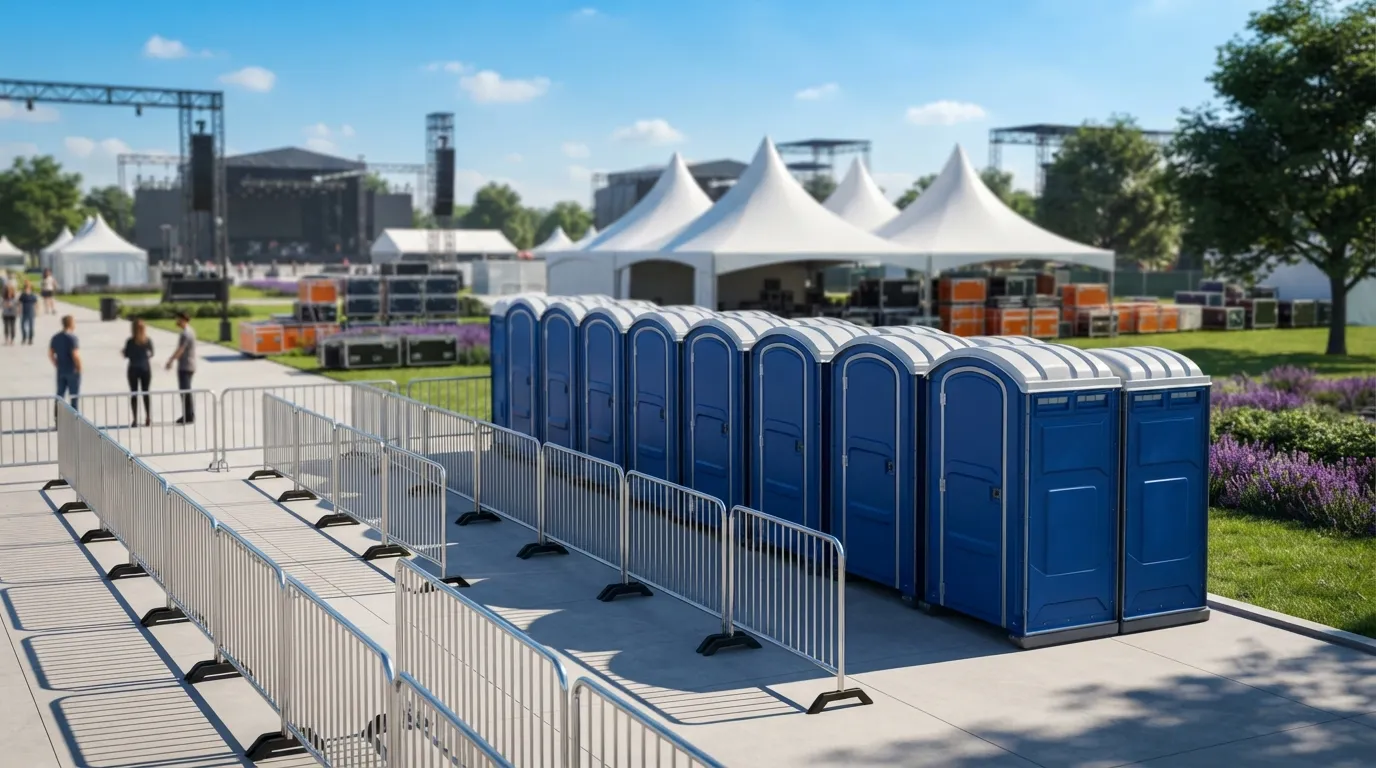
What we rent
Typical Charlotte ranges, not a quote. Delivery is $50 to $150 and a weekly service visit $30 to $60. See the full cost breakdown.
$125 to $250 a weekend
$200 to $350 a weekend
$199 to $300 a weekend
Quoted by stall count
The rest of the yard
We deliver across Mecklenburg County and over the state line:
Full service area and drive times or request a quote with your address and dates.
Next step
Tell us the address, the dates and the headcount. We size the order and confirm the route.